Pit bulls are famously sturdy dogs, but like every breed they have their own health needs. The good news is that most of them are easy to meet: good food, plenty of exercise, regular vet care and a daily routine. Get those right and your pit bull can enjoy a long, happy life of twelve to fourteen years or more.
Feeding Your Pit Bull
Pit bulls are muscular, active dogs, and they do best on a high-quality diet with real meat as the first ingredient. Look for food that suits your dog’s age — puppy, adult or senior — and feed measured meals rather than leaving food out all day. Pit bulls love to eat, and they can gain weight quickly if portions are not watched.
How much your dog needs depends on its size, age and activity level, so use the feeding guide on the food as a starting point and adjust with your vet’s advice. Treats are fine, but they should make up no more than about ten percent of daily calories. Keep fresh water available at all times, especially after exercise.
Some pit bulls have food sensitivities, most commonly showing up as itchy skin or an upset stomach. If you notice either, talk to your vet about an elimination diet before switching foods at random.
Exercise and Daily Routine
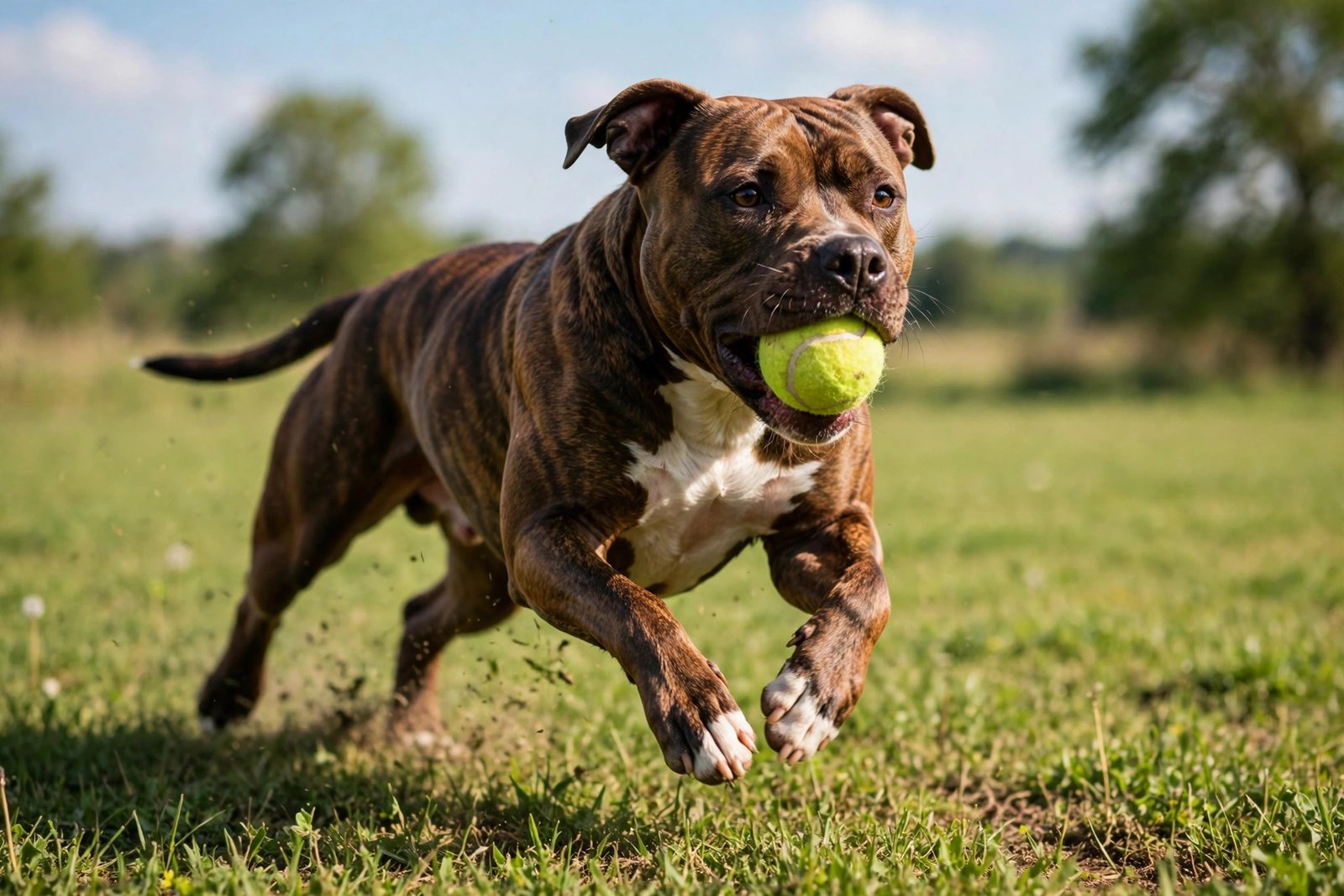
A healthy adult pit bull needs at least an hour of exercise every day — and many are happiest with more. Brisk walks, running, fetch, tug and swimming are all excellent. Mental stimulation matters just as much: puzzle feeders, training games and scent work keep a clever dog’s brain busy.
A simple daily routine works well: a morning walk or play session, meals at set times, a midday or evening walk, and wind-down time with the family in the evening. Pit bulls thrive on predictability — they relax when they know what comes next.
Be careful in heat. Pit bulls are short-coated and can overheat during hard exercise on hot days, so exercise in the cooler hours and watch for heavy panting or slowing down.
Common Health Issues to Watch For
Pit bulls are generally healthy, but a few conditions are worth knowing about. Skin allergies are the most common — itching, red patches or ear infections can signal an allergy to food, pollen or something in the environment. Regular grooming and vet checks catch these early.
Hip dysplasia, a malformation of the hip joint, can affect pit bulls, especially if they are overweight or over-exercised as puppies. Keeping your dog lean and avoiding excessive jumping or stair use in puppyhood helps.
Pit bulls can also be prone to knee problems, thyroid issues and, as they age, arthritis. None of these is a certainty — they are simply things to watch for. Annual vet check-ups, dental care and a healthy weight are the best prevention.
Grooming and Everyday Care
Pit bull grooming is refreshingly simple. Their short coat needs a quick brush once a week to remove loose hair, and a bath every month or so — or whenever they get muddy. Their ears should be checked regularly, especially if your dog swims, and their nails trimmed every few weeks.
Dental care is easy to forget but important: brush your pit bull’s teeth a few times a week, or offer vet-approved dental chews. Clean teeth mean a healthier dog and fresher breath for everyone.
The Bottom Line
Caring for a pit bull is not complicated. Feed them well, move them daily, keep up with vet visits, and give them the company they crave. Do that, and you will have a strong, healthy, happy dog — and a companion that will love you with its whole heart for years to come.