Training a pit bull is one of the most rewarding things you can do with your dog. Pit bulls are smart, food-motivated and desperate to make you happy, which means they learn fast when training is positive, consistent and fun. The key is to start early, keep it kind and give them an outlet for all that energy.
Start with Socialisation
Socialisation is the single most important part of raising a pit bull. Between roughly three and sixteen weeks of age, puppies are especially open to new experiences, and what they meet in that window shapes how they see the world as adults.
Introduce your puppy to different people, sounds, places and other dogs — calmly and at the puppy’s pace. Short, positive encounters beat long, overwhelming ones. A puppy that has met children, bicycles, vacuum cleaners and friendly dogs without fear grows into a confident adult.
For adult rescue pit bulls, socialisation still works — just go more slowly. Let the dog watch other dogs from a distance, reward calm behaviour, and build up gradually. Patience pays off enormously.
Obedience: Keep It Positive and Consistent
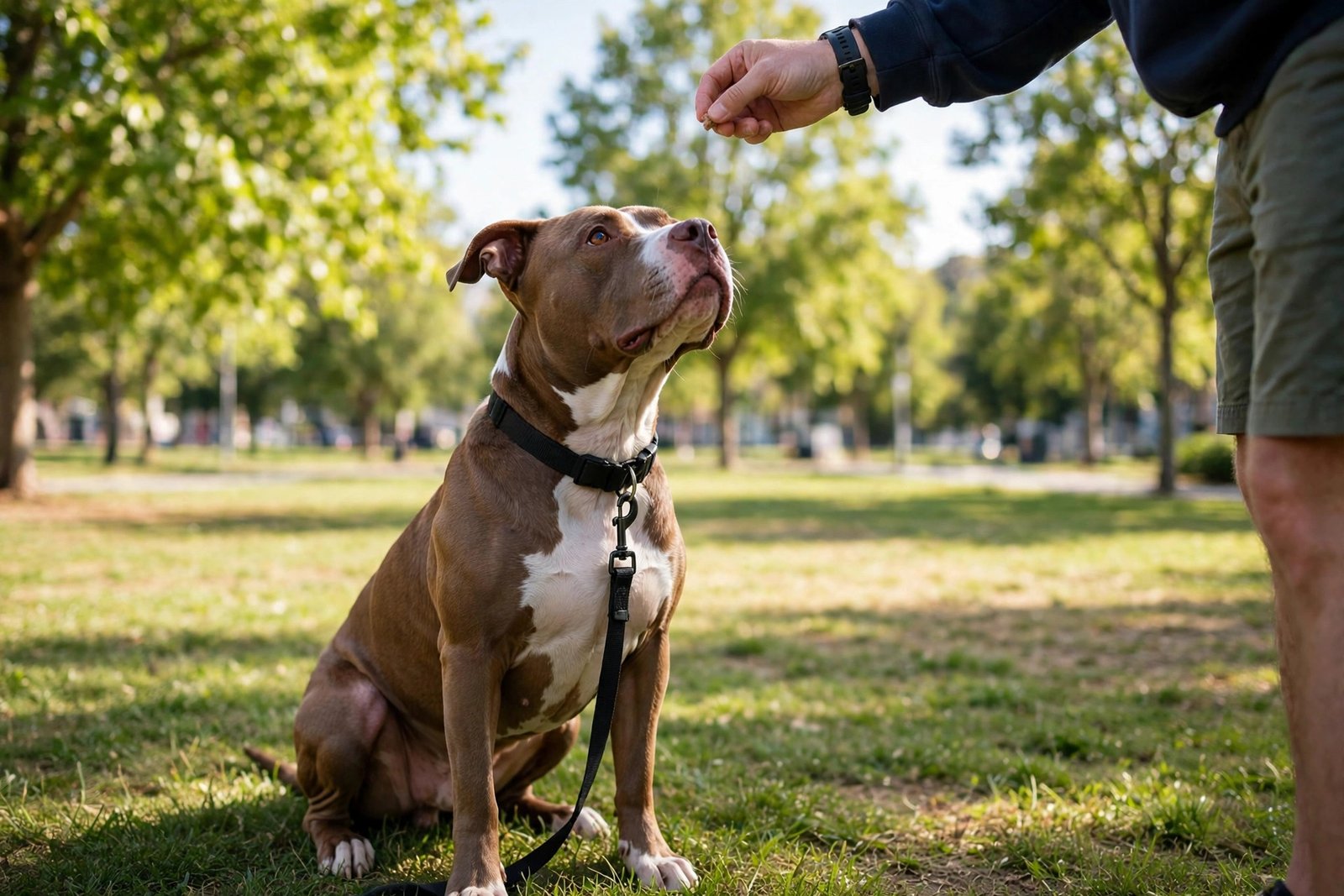
Pit bulls respond best to reward-based training: treats, praise, toys and play. Harsh corrections backfire badly with this breed — they can damage trust and increase fear or frustration, which is the opposite of what you want.
Start with the basics: sit, stay, come, down and loose-leash walking. Keep sessions short — five to ten minutes, a few times a day — and end on a success. Pit bulls love to work for food, so use high-value treats for harder tasks and fade them gradually as the behaviour becomes reliable.
Two commands deserve special attention. A solid recall (“come”) is essential for a strong, fast dog, and “leave it” can keep your pit bull safe from things it should not eat or chase. Practice both every day, in different places, with increasing distractions.
Exercise: A Tired Pit Bull Is a Well-Behaved Pit Bull
Pit bulls are athletes. Most need at least an hour of exercise a day, and many want more. A bored pit bull with unspent energy is the dog that chews the furniture, digs up the garden or pulls on the lead.
Mix it up: brisk walks, runs, fetch, tug games, swimming and flirt poles all work well. Mental exercise counts too — puzzle feeders, scent games and trick training tire a dog out just as surely as a run. A pit bull that has had both physical and mental work in a day is a calm, content dog in the evening.
Be careful with exercise in hot weather. Pit bulls are short-coated and can overheat, so walk in the cooler parts of the day and always carry water.
Common Challenges and How to Handle Them
Pulling on the lead is the classic pit bull problem — they are strong. A front-clip harness helps, and rewarding your dog for walking beside you, even for a few steps at first, builds the habit over time. Never use pain-based tools; they damage trust and can make pulling worse.
Jumping up is another favourite. Pit bulls greet with their whole body. Teach a solid “sit” for greetings and reward four paws on the floor — and make sure visitors do the same.
Mouthiness and chewing are normal, especially in puppies. Redirect to a toy every time, and give your pit bull plenty of legal things to chew.
The Payoff
A trained pit bull is a joy: calm in the house, polite on walks, confident around strangers and other dogs, and deeply bonded to you. Training also builds the trust that makes everything else easier — vet visits, grooming, travel and daily life.
Put in the time, keep it positive, and your pit bull will repay you many times over. These dogs want to get it right. Your job is simply to show them how.