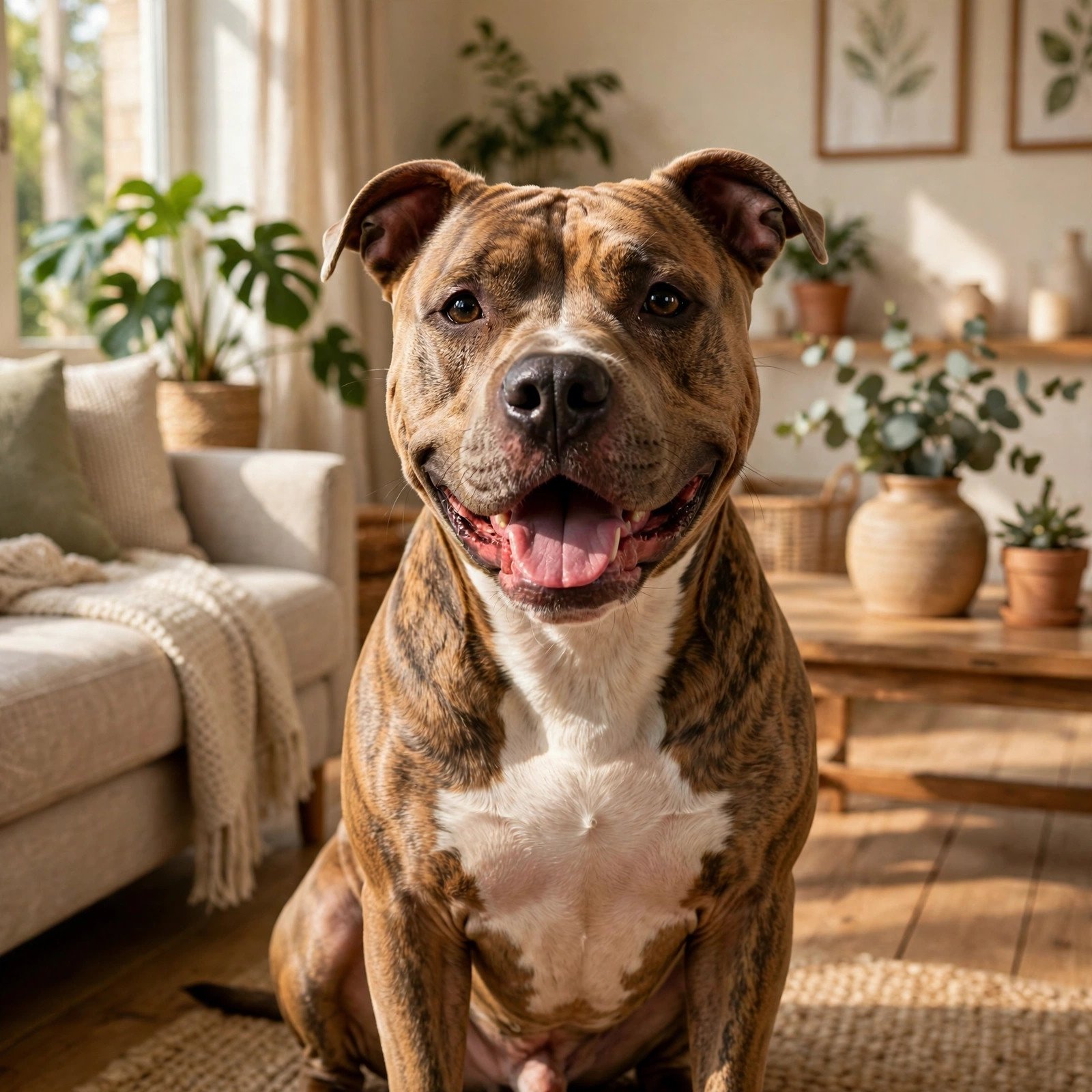
Say the words “pit bull” and most people picture something tough. Spend a week with one, though, and you will meet a very different dog: a wiggly, smiling, people-obsessed companion that leans its whole weight into your legs, wags its entire body when you come home, and believes every lap is made for sitting on — no matter how big it is.
Pit bulls are not one single breed but a group of closely related breeds, including the American Pit Bull Terrier, the American Staffordshire Terrier and the Staffordshire Bull Terrier. What they share is a muscular build, a big heart and a deep love of people.
A History of Hard Work and Family Life
Pit bulls were developed in 19th-century England from bulldogs and terriers. They were strong, athletic working dogs, but they were also kept as family companions — and that second job shaped them. Early pit bulls were known as “nanny dogs” in some circles, not because they were trained babysitters, but because they were famously gentle and patient around children.
When the breed came to America, pit bulls became farm dogs, war mascots and family pets. They appeared on posters, in films and in family photos. The tough reputation came much later, and it says far more about how some people treated these dogs than about the dogs themselves.
Temperament: Loyal, Affectionate and Eager to Please
The defining trait of a pit bull is its devotion to people. Pit bulls bond deeply with their families and want to be part of everything — walks, sofa time, car rides, even trips to the bathroom. They are playful well into adulthood, often silly, and they love physical affection: belly rubs, cuddles and leaning against you like a warm, heavy blanket.
They are also clever and eager to please, which makes them very trainable. A pit bull that is treated with kindness and consistency will try its hardest to get things right. They thrive on praise, play and routine, and they do best in homes where they get plenty of attention.
Like any strong, energetic dog, pit bulls need boundaries and exercise. A bored pit bull can become a destructive one — not out of spite, but out of energy with nowhere to go. Daily walks, play sessions and puzzle toys keep them happy and well behaved.
Life with a Pit Bull
Pit bulls do well in many kinds of homes, from houses with gardens to apartments, as long as they get enough exercise and company. They are usually wonderful with children — patient, sturdy and tolerant — though, as with any dog, play should always be supervised.
They can be less easy with other dogs, especially dogs of the same sex, so early socialisation matters. A pit bull that grows up meeting other dogs calmly, in controlled settings, is far more likely to be relaxed around them as an adult.
One thing to know: pit bulls are not good “outside dogs.” They are short-coated, sensitive to cold and heat, and above all they want to be with their people. A pit bull left alone in a yard all day will be an unhappy dog. A pit bull on the sofa, head on your knee, is a dog in paradise.
The Dog Behind the Headlines
Pit bulls have been judged more harshly than almost any other dog, and that judgement has cost many of them their lives in shelters. Yet the people who actually live with pit bulls tend to describe the same thing: a goofy, loyal, loving dog that wants nothing more than to be close to you.
If you are thinking about a pit bull, meet one first. Visit a shelter, spend time with the dog, and let it show you who it is. Chances are it will lean against your leg, look up at you with hopeful eyes, and win you over completely.
The pit bull’s reputation was written by people. Its real story is written every day in living rooms, on walks and in the arms of the families who love it.