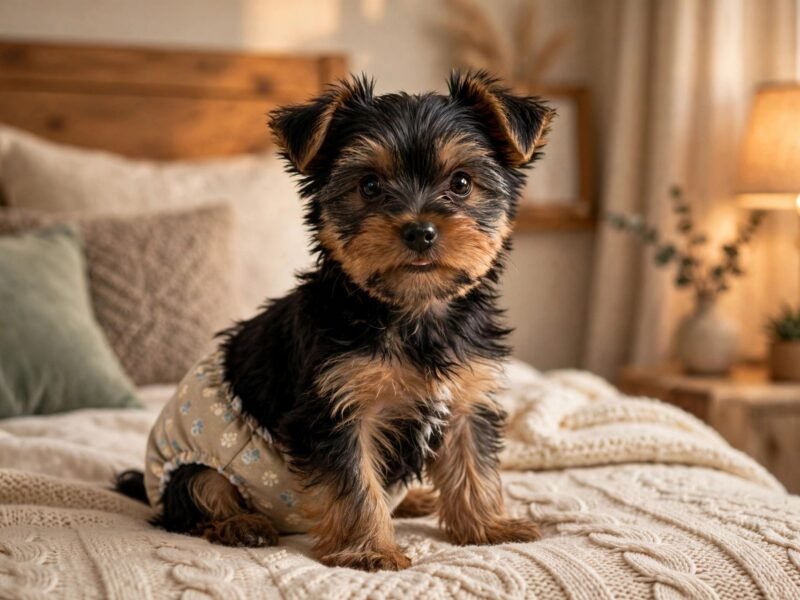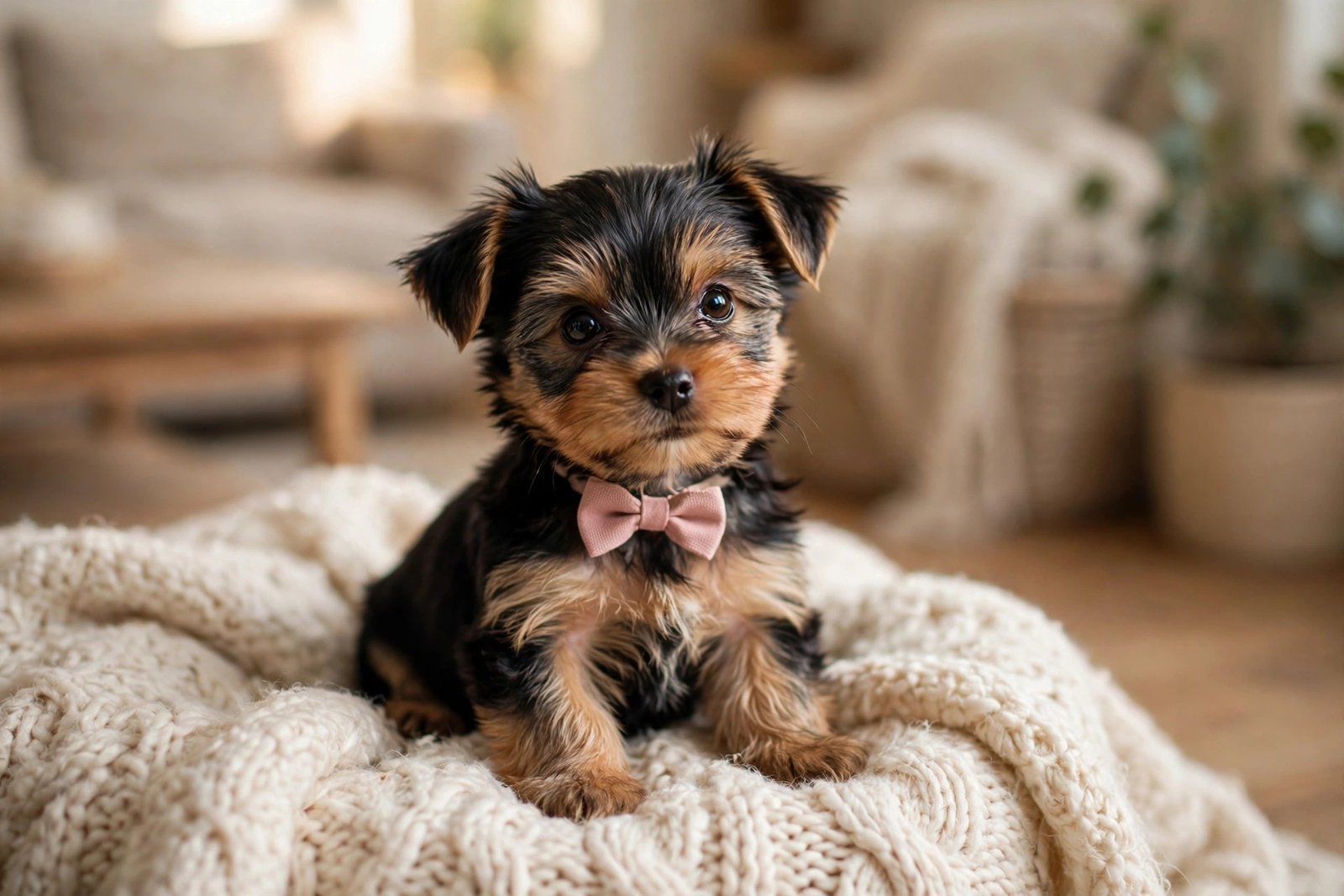
A Yorkshire Terrier puppy is one of the smallest dogs you can bring home — often barely a kilogram — and one of the boldest. From the first day, your Yorkie puppy will act as if it owns the house, and in a way it does: tiny dogs need careful, thoughtful care, because their small size makes them more fragile than they realise.
Setting Up for a Tiny Puppy
Before your Yorkie puppy arrives, prepare a small, safe space: a crate or pen with a soft bed, water bowl, puppy pads and a few small toys. Yorkie puppies can squeeze into surprising gaps and are easily stepped on or caught in doors, so block off hazards and teach everyone in the house to watch their feet.
Because Yorkies are so small, everything should be puppy-sized: a light collar and lead, small bowls, and toys made for toy breeds. Keep the puppy off high furniture and beds at first — a fall that would not hurt a bigger puppy can injure a Yorkie.
Feeding a Yorkie Puppy
Yorkie puppies have tiny stomachs and fast metabolisms, which means they need small, frequent meals — usually four a day at first, moving to three and then two as they grow. Use a high-quality puppy food made for small breeds, and measure portions carefully: it is easy to overfeed a dog this small, and just a few extra grams matter.
One important thing to watch for is low blood sugar. Toy puppies can become shaky, wobbly or lethargic if they go too long without eating, especially when they are stressed or overtired. Regular meals, and never skipping a meal for a young Yorkie puppy, help prevent this. If your puppy ever seems weak or wobbly, offer food and call your vet promptly.
Fresh water should always be available, in a shallow bowl your puppy can reach easily.
Sleep and Routine
Yorkie puppies sleep a great deal — up to twenty hours a day — and that sleep is essential for growth. Give your puppy a warm, quiet sleeping spot, ideally a crate near your bed for the first nights. The puppy will likely cry at first; a soft ticking clock or a warm blanket can help, and keeping the crate close lets the puppy know it is not alone.
A steady routine helps enormously: meals, toilet breaks, play and naps at roughly the same times each day. Yorkie puppies do best when they know what comes next, and a predictable day makes house training much easier.
House Training a Tiny Dog
House training a Yorkie takes patience. Small bladders mean frequent toilet trips — after meals, after naps, after play and every hour or two. Praise and treat immediately when your puppy goes in the right place.
Because Yorkies are small, accidents are small too, and it is easy to miss them. Watch your puppy closely, learn its signals — circling, sniffing, squatting — and act fast. Puppy pads by the door are a useful backup, especially in bad weather or for owners who are out briefly. Stay positive and never scold accidents; your puppy is learning, and scolding only teaches it to hide from you.
Gentle Socialisation and Handling
Handle your Yorkie puppy gently and often: touch its paws, ears and mouth, brush its coat briefly, and let it meet different people in a calm way. Early, positive handling makes grooming and vet visits far easier later.
Socialise carefully. Yorkie puppies are fearless and will try to take on dogs ten times their size, so supervise all meetings with bigger dogs and step in before play gets rough. Short, positive encounters with friendly, calm dogs teach your puppy confidence without danger.
A Tiny Puppy with a Huge Heart
The first weeks with a Yorkie puppy are a mix of careful watching and constant delight. You will worry about its size, and then laugh as it bosses around a dog five times bigger. Keep meals regular, keep handling gentle, keep the routine steady — and enjoy every minute. Your tiny puppy is growing into a brave, loyal companion that will be by your side for many years.