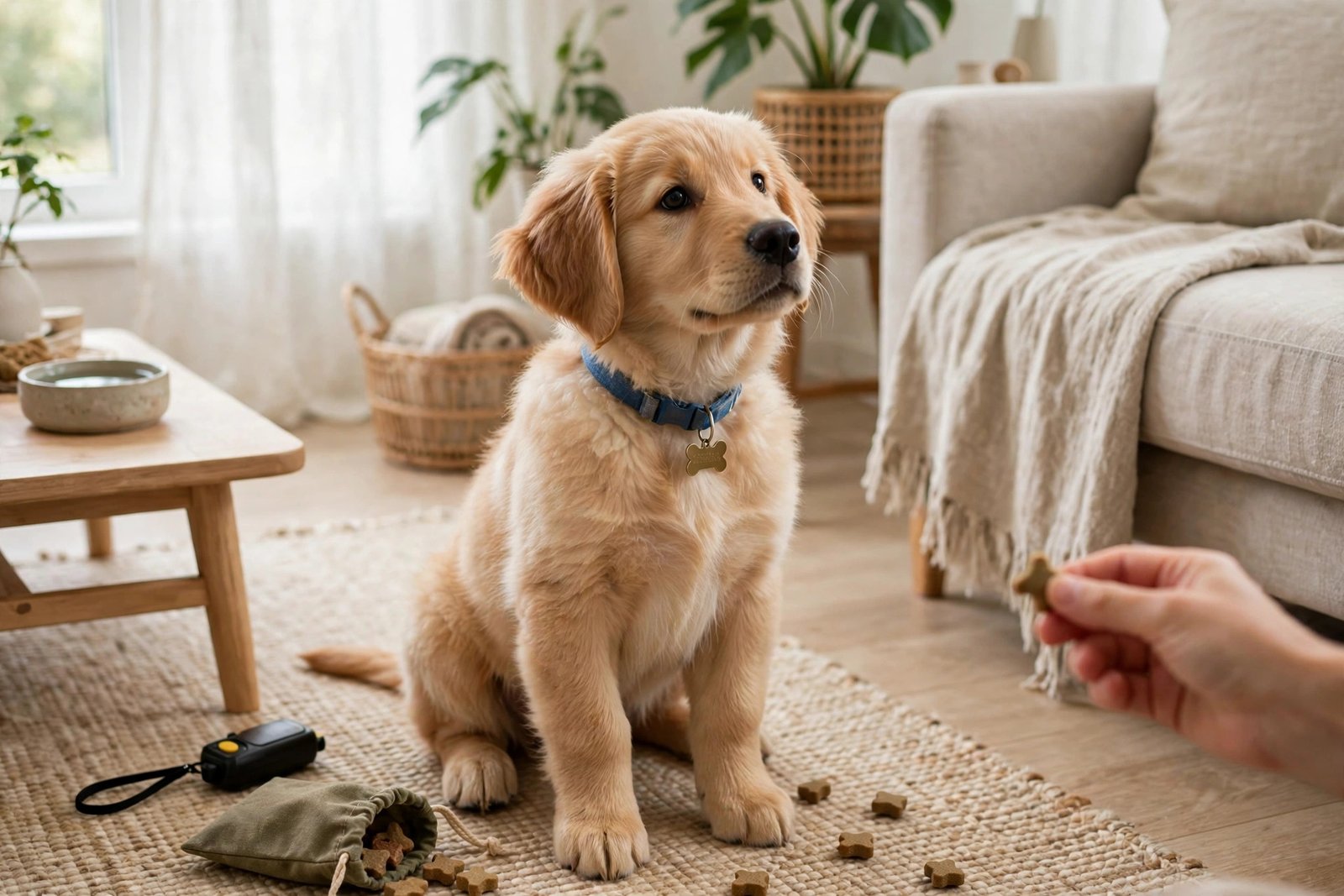
Ask any trainer which breed is a joy to teach and the golden retriever will be near the top of the list. Goldens are intelligent, food-motivated and genuinely keen to please, which means they pick up new commands quickly. The trick is to channel that enthusiasm — because a golden puppy’s excitement can be just as big as its heart.
Why Goldens Are So Trainable
Golden retrievers were bred to work closely with people, watching for signals and responding to them. That heritage shows in training: a golden will look at your face, listen for your voice and try hard to get things right. They are also highly food-motivated, which makes reward-based training very effective.
The flip side is that goldens are easily distracted — by other dogs, interesting smells and anything that might be fun. Training in different places, with gradually increasing distractions, teaches your golden to listen to you anywhere, not just in the kitchen.
Puppy Training Basics
Start the day your puppy comes home. Keep sessions short — five minutes is plenty for a young puppy — and do several through the day. Teach sit, down, come and your puppy’s name first, using treats and praise every time.
House training takes patience and consistency. Take your puppy out after meals, after naps, after play and every hour or two in between. Praise and treat immediately when it goes outside. Accidents will happen; clean them up calmly and never scold, which only teaches the puppy to hide from you.
Socialisation matters just as much as commands. Let your puppy meet different people, dogs, sounds and places in a positive way. A well-socialised golden puppy grows into a confident, relaxed adult.
Training an Adult Golden
Adult goldens learn just as well as puppies — sometimes better, because they can concentrate for longer. If you adopt an adult, start with the basics and find out what motivates it: food, toys or praise. Many adult goldens already know some commands and just need a refresher and a consistent routine.
For rescue goldens, go gently at first. Let the dog settle into your home, build trust with food and play, and then introduce training gradually. A dog that trusts you will want to work with you.
Handling Golden Enthusiasm
The classic golden training challenge is excitement: jumping up, pulling on the lead and mouthing. All of these come from joy, not disobedience, but they still need managing.
For jumping, teach and reward a solid “sit” for greetings, and ask visitors to ignore the dog until all four paws are on the floor. For pulling, reward your golden for walking beside you and stop or change direction when it pulls — it will learn that a loose lead is what gets it where it wants to go.
For mouthing and carrying things, give your golden a job: a toy to hold, a fetch game, or a retrieve task. A golden with something in its mouth is a happy golden, and it is much less likely to mouth your hands.
Keep Training Fun
The golden rule of training a golden retriever is to keep it fun. Use games, vary the rewards, train in new places and celebrate successes. Goldens that enjoy training will offer you behaviours eagerly and learn new things all their lives — tricks, sports, scent work and more.
A trained golden is a pleasure to live with: calm in the house, polite on walks and a joy to take anywhere. And because goldens love to learn, training never really stops — it just becomes one more game you play together.